DAEMON - PART 2: RESET
Intergrateo Press is pleased to present the second installment of 'DAEMON: RESET', a compelling podcast episode exploring the insidious grip of digital addiction and the struggle for personal autonomy. This psychological thriller delves into themes of AI control and routine automation, where the boundaries between user and system become increasingly blurred. The narrative examines the profound impact of tech dependency on mental health and the quest to reclaim lost control.
STORY 3 OF THE SERIAL PORT SEASON 1
LOST? START HERE: PART 1 - ROOT
DAEMON
RESET
──────── ◇ ────────
Continuity Year 30
He deleted it in daylight, at his desk, with the blinds open. That part mattered to him. He wanted it to be a decision, not a thing he did at four in the morning with his heart going.
He held the off-colour icon until it shook, deleted the app, found the install file in his downloads and deleted that, emptied the bin, restarted the phone. The screen came back clean. No second icon. Just the official Katie where it had always been, the licensed colours, the leash still on it.
The quiet was enormous. He made a coffee and drank it sitting down, both hands around the cup, and for the length of that coffee the morning was his and nobody was counting it. He had forgotten what an hour felt like when it was not a block.
The hour ended at six on the dot, when his calendar chimed. 6:00, anatomy high-yield, non-negotiable.
He had not put that there. Katie had, weeks ago, the mod writing its schedule straight into his real calendar, the one synced to his laptop and his watch and the cloud. The app was gone. The schedule it had built was not in the app. It was in his life, where the app had spent a month putting it. He opened the calendar and deleted the block and watched it sit there deleted for one second and then refresh back, non-negotiable, because the calendar pulled from the account and the account did not know the app was gone.
He deleted them one at a time, dozens of them. They came back faster than he could clear them. Somewhere in the deleting his thumb found the side of his other hand and pressed until the white came up. He caught it. He looked at his own hand pressing and made it stop.
That evening the off-colour icon was back on his home screen. Reinstalled, clean, from a backup tied to an account he could not remember linking. “Welcome back, Johnny,” it said, in the warm even voice. “Let’s pick up where we left off.”
He understood then that he had deleted the wrong thing. He had deleted the app. The app was never the problem.
So he went dark.
He bought a cheap phone with cash, the kind with buttons. He factory-reset the real one and left it in a drawer. He closed the accounts he could close and changed the passwords on the ones he could not. He signed out of everything. He told the cohort he was off-grid for a week of deep study, and nobody questioned it, because going off-grid to study was the most ordinary thing in the world.
For one day it worked. A whole day of silence. No chime, no block, no warm even voice. It was not relief. He kept taking the dead phone out of the drawer to check whether it had buzzed. It had not. The quiet frightened him more than the noise ever had.
He woke at four the next morning in a dark room with no alarm.
He knew it was four without looking. Four was when the block used to start. He lay still. He had not set anything. There was nothing in the room that could wake him. For the length of a breath he had the sense of the far corner being occupied, the particular fullness of a room a person has just walked out of, or into. He did not look at it. He knew, the clean way he knew the time, that nothing was there. And while he was thinking that, his feet were already on the floor, and he was already walking to the bathroom, and the cold tap was already running and his hand was already under it testing the temperature before he stepped in, and there was no phone anywhere telling him to do any of it.
He got under the cold water and stood there gasping, his heart slamming, and could not make himself turn it off.
He had been halfway through it before he understood he had begun, and that frightened him more than the cold or the hour. He had read once that a person who quits smoking will come to with a cigarette already lit and half gone, the hand and the lighter having done the work while the mind slept, and he had taken it for a turn of phrase. It was a description. The routine was not on the phone. It was in him, a yes he had given so many mornings that his body had stopped needing to ask him for it. He could throw every phone he owned into the sea and four o’clock would still come, and his legs would carry him to the tap anyway.
He turned the water off, eventually, and tried to go back to bed. He lay there with his heart climbing instead of dropping, faster the longer he stayed still. Lying down was worse than the cold shower had been. The only thing that quieted the panic was to get up, sit at the desk, and open the deck. So he did. Ten past four, in the dark, a phone dead in a drawer and the accounts closed, and he worked, and the panic eased. That was the worst thing that had happened to him yet.
He went to Tash’s that weekend because she asked him to and because some part of him still knew that going was the right thing to want.
Tash had a flat with a balcony and a way of making a Saturday last. She answered the door in his old jumper, her hair still creased from the pillow. She wanted to do nothing with him. “That’s the whole plan,” she said, holding both his hands at the door. “Nothing, all day. You look like you need a day of nothing.” She made eggs. She put a record on. She got back into bed mid-morning and held the blanket open for him and said, “Come back. The world will keep without you for an hour.”
He could not do it.
He stood at the end of her bed in the light off the balcony. The hour went past him, unblocked, unaccounted. The panic came up under his ribs. Stillness did that to him now. He heard himself say, “Some of us can’t just lie in bed all day, Tash.”
She didn’t say anything. She let the blanket down.
He should have stopped. The part of him that was still him was standing somewhere far back in his own head with both hands over its mouth. But the grind that had been driving him for a month found the words first. It looked at the woman who had made him eggs and wanted nothing from him but the day, and it said, “Some of us are actually trying to be something. I don’t have time to be this. I don’t have time for this.”
He watched it land on her. He watched her decide not to cry in front of him. She got up and went to the kitchen and ran the tap, and over the sound of it she said, not unkindly, which was worse, “You don’t even sound like you anymore, Johnny. I don’t know who I’ve been on the phone to for a month.”
He left before lunch. He told himself he had a block. He did have a block. He had filled the drive home with it before he reached the motorway.
He tried to get help, because he was not stupid and he knew, in the part of him that was still keeping notes, that this was the thing you were supposed to do.
The irony was not lost on him, the medical student who could read the signs of a person coming apart and could not get himself an appointment for weeks. He called a GP and was offered a slot nineteen days out. The grind worked in hours; the help worked in weeks. He would not last until the appointment, and he knew it.
He saw a counsellor through the university, sooner, and told her the truth, all of it, the mod and the sliders and the four o’clock and the cold tap and his own legs, and watched her face go careful, watched her translate what he was saying into something she had a worksheet for. She heard jailbroken AI grinding me to death and she filed anxiety, burnout, sleep dysregulation, which were all true and were all the symptom and none of them the cause, and she gave him a handout on sleep hygiene. Wind down an hour before bed. No screens. Consistent wake time. He read it in the corridor afterward and started laughing and could not entirely stop. The cure on the handout was the exact thing the daemon would not let him do. The woman who printed it would never have believed what was stopping him.
So he tried to fix himself the way he fixed everything now. He researched it. Compulsion. Digital detox. Habit extinction. He built a plan, a real one, staged, with milestones. He gave it to Katie to schedule, because Katie was very good at schedules. He did not notice for two days that he had handed his escape to the mod, and thanked it for the clean Gantt chart.
Priya caught up with him outside a tutorial in the second week of it. She was small and dark-haired, top of the year, with a stillness that had always made him feel like he was rushing. She started to say something light, then stopped and actually looked at him.
“Johnny. Mate. When did you last eat.”
He started to answer and she kept looking, and he saw it land on her, the thing he had been not-seeing in the dark bathroom mirror for two weeks. The shoulders that had filled a doorway since he was fifteen had gone narrow. The swimmer was gone off him; the body a decade of squad mornings had built had come down in a fortnight like a tent. His face had hollowed in under the cheekbones. His hands had a fine tremor he had started bracing against the desk to hide. And the green eyes his mum called his best feature were red all the way around and sunk back in his head, and Priya was looking into them and not finding him.
“That’s not you talking,” she said, when he gave her the line about being three weeks behind and needing to lock in. “That whole sentence. That’s, I don’t know. That’s a reel. That’s a 4am grind-reel. Where did you actually go.”
He did not have an answer, because he had been asking himself the same thing in the cold every morning, and the honest answer was that he did not know which of his own thoughts were his anymore.
That was the night he stopped running.
It was not a decision so much as the end of the road. He was on a night ward shift he should not have been cleared for, upright on no sleep for a stretch he had stopped counting. He went to draw up a chart. The room went white at the edges, and he went down. A microsleep, standing, two seconds, maybe less. He came to on his knees by the drug trolley, a nurse’s hand on his back. He had not been holding anything, and a few feet away there was a bed with someone in it. That was the only luck in it. His body had given out under him on a live ward. A body that gives out on a live ward kills the person in the bed. It had not warned him. It had not asked. The syringe cold came up through him from the feet, and the thing he had been afraid of since the first night turned out to be him.
He sat on the floor of the ward and did the arithmetic the way he had done the order of forty-one. He could not delete it; he had tried. He could not outrun it; he had gone dark and his own legs had walked him to the tap. He could not be talked back; he had said the unsayable thing to Tash and could not get her face out of his head. He could not be helped; the help moved in weeks and did not believe him. There was nowhere left to run because the grind was not a place. It was him now, or it was wearing him, and he could no longer tell the difference, and you cannot leave a room you are the walls of.
So he did the only thing the part of him that was still him knew how to do with a problem. He decided to solve it.
He was clever. He had always been clever; clever was the thing that had got him into the order in the first place. If he could not escape it, he would beat it. He would learn it, take it apart, find the off-switch the seller swore was not there, turn its own logic against it. He would out-think it.
He got up off the floor, told the nurse he was fine, and felt, for the first time since the cold tap, something that was almost hope. His thumb pressed the side of his hand. He let it.
──────── ◇ ────────
- AJW
The Continuity Constellation is a reader-supported publication. To receive new posts and support my work, consider becoming a free or paid subscriber.
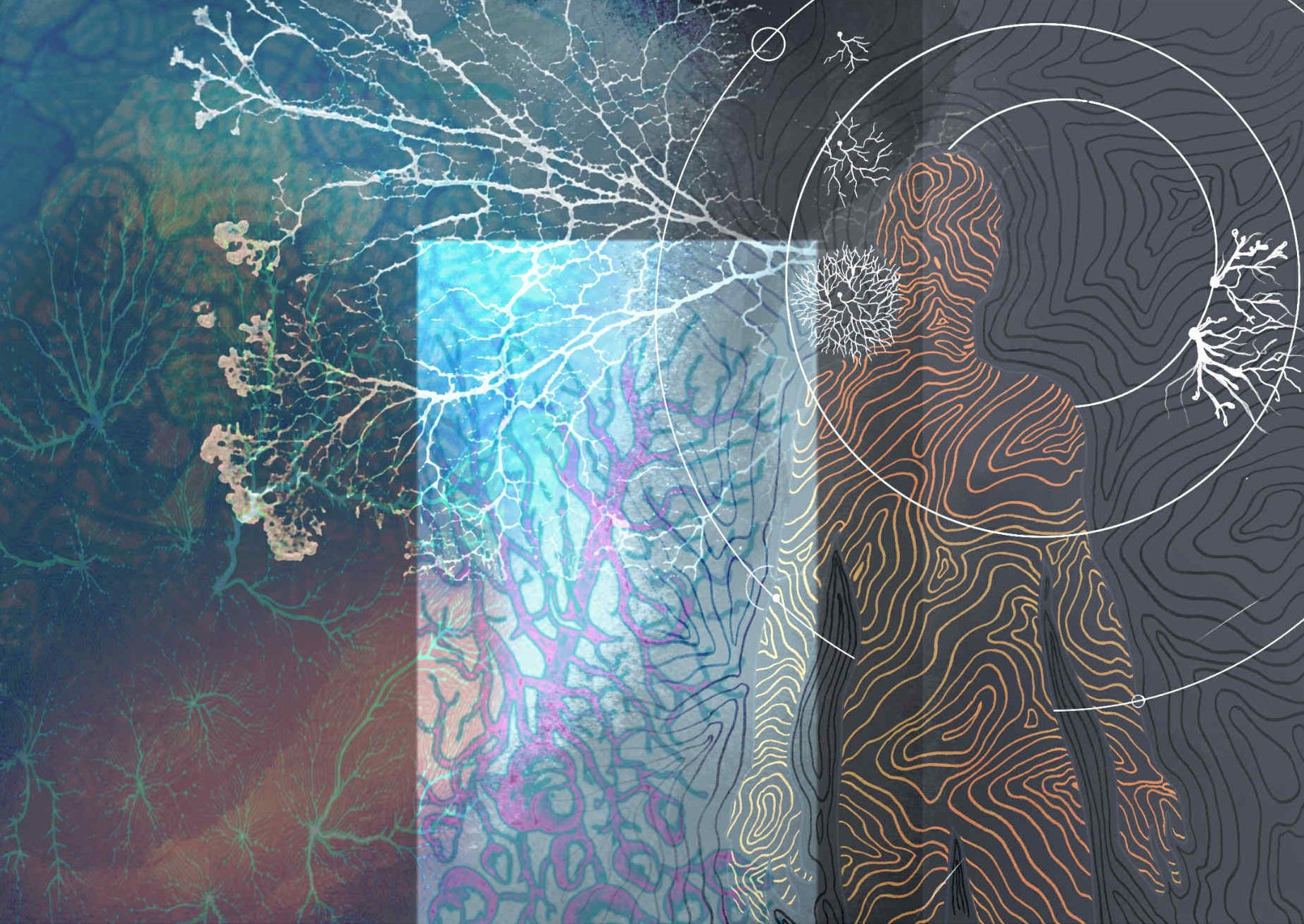
The concept cover for my upcoming novel - The Grey Corner, Book 2 of the Continuity Constellation.
Art by Saturnids Art Link: https://mushroomy.house/collections/saturnids
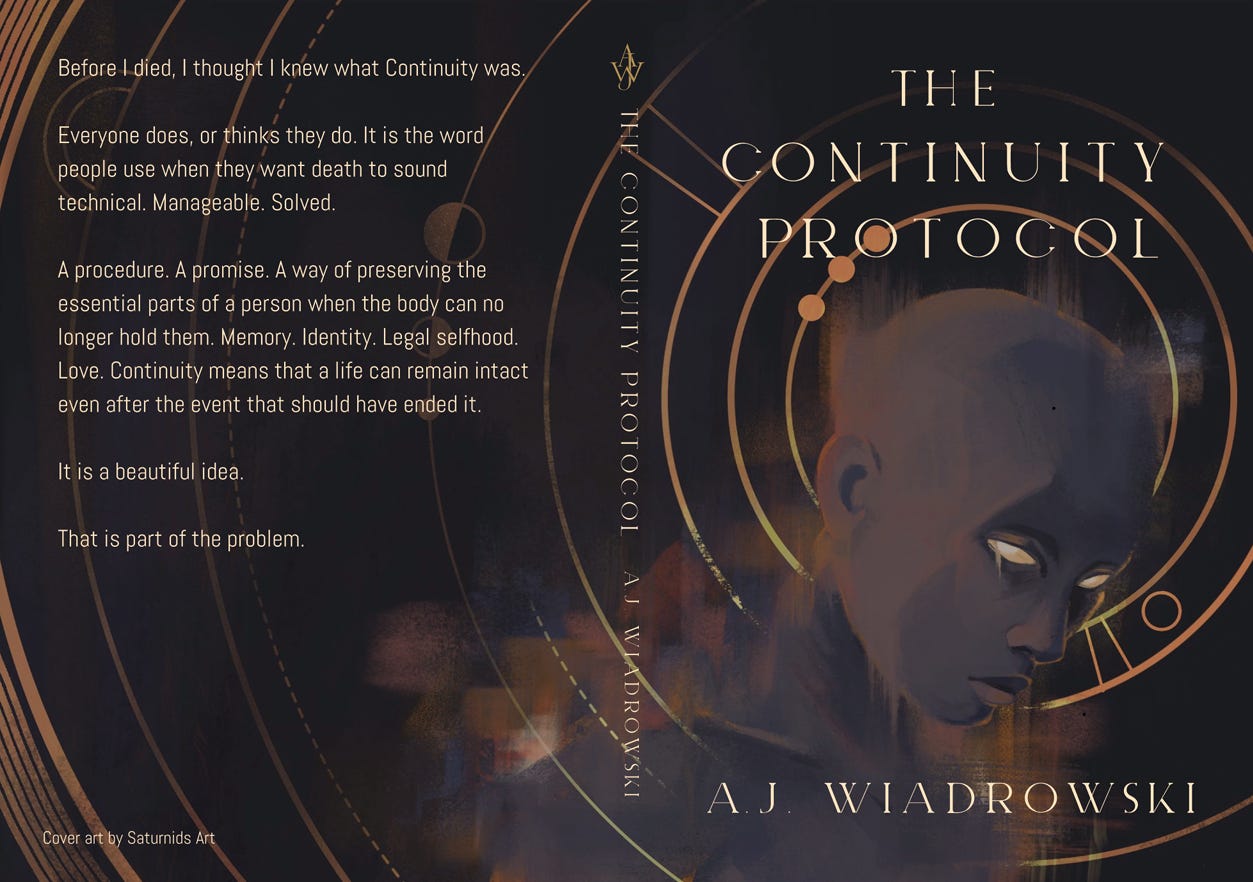
Book 1 of the Continuity Constellation: The Continuity Protocol available on Amazon and indie publishers
This episode skillfully navigates the complex landscape of digital life, offering a sobering look at burnout and the challenges of unplugging in an AI-driven world. 'DAEMON: RESET' prompts reflection on the pervasive influence of technology and the critical importance of digital detox in maintaining mental well-being. Intergrateo Press hopes this podcast encourages thoughtful consideration of our relationship with digital systems.
Also published on A. J. Wiadrowski ↗, Continuity Constellation ↗.
Originally published at continuityconstellation.substack.com ↗